The Temptation of DIY
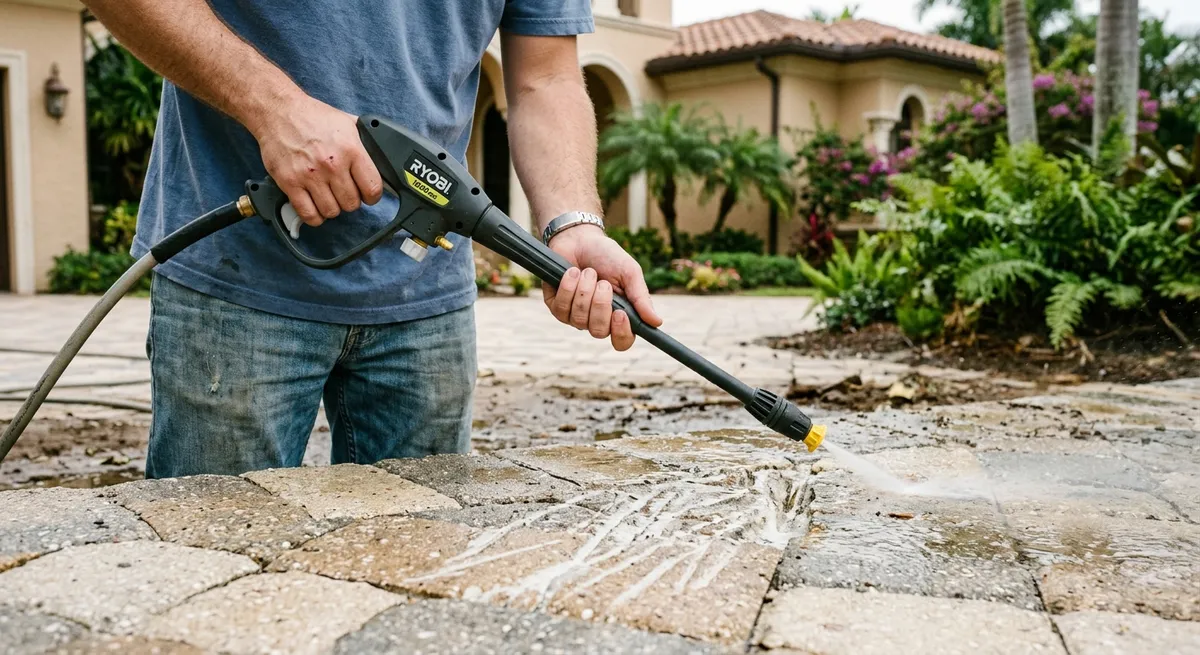
We get it. You walk by Home Depot, see pressure washers for rent, and think: "How hard can it be? Point and spray, right?"
We've cleaned up after enough DIY disasters to tell you: it's not that simple. Pressure washing looks easy, but there's a reason professionals train for this work. The wrong technique, pressure setting, or nozzle can cause permanent damage in seconds.
Let's walk through what can actually go wrong—and why hiring a professional is often the smarter investment.
Damage #1: Etched Concrete
Using too much pressure or holding the wand too close creates permanent lines, swirls, or rough patches in your concrete. Consumer pressure washers can reach 3,000+ PSI—enough to physically remove the top layer of concrete. Move too slowly or use the wrong nozzle, and you've got visible damage.
The bad news? Etched concrete often can't be repaired. You're looking at resurfacing or living with it. We prevent this by adjusting pressure for your specific surface, using appropriate nozzles, and maintaining consistent distance and movement speed.
Damage #2: Stripped Paint and Sealers
Paint peels, sealers strip away, and wood fibers raise on decks and fences. Coatings that seem firmly attached are no match for concentrated water pressure. Even "safe" pressure settings can damage paint that's slightly weathered or improperly applied.
The fix? You'll need to repaint or reseal the affected surfaces—often the entire area, not just where the damage happened. We prevent this by identifying coated surfaces before starting and adjusting our approach. Sometimes soft washing is the right choice instead of pressure washing.
Damage #3: Destroyed Window Seals and Screens
Water forces past window seals, causing fog between panes. Screens tear or blow out of frames. It's tempting to hit windows with the pressure washer to "clean them while you're at it," but window seals aren't designed for that kind of force.
Foggy windows require full replacement—$200-500 per window or more. We never pressure wash windows. Glass cleaning requires completely different techniques and equipment.
Damage #4: Gouged Wood
What happens: Deck boards and fence pickets develop furrows, splintering, and raised grain. Why it happens: Wood is softer than concrete and far more vulnerable to pressure damage. Even brief exposure to high pressure can permanently scar the surface. The fix: Sanding (if shallow) or board replacement (if deep). How pros prevent it: We use significantly lower pressure on wood and often opt for soft washing with appropriate cleaning solutions.Damage #5: Shifted Pavers and Damaged Joints
What happens: Joint sand washes out, pavers shift or settle unevenly, and weeds return faster than ever. Why it happens: High-pressure water displaces polymeric sand and can even shift pavers if aimed at an angle. The fix: Pavers may need to be reset, and all joint sand will need replacement. How pros prevent it: We use surface cleaners that contain and control water spray, protecting joints while cleaning surfaces.The Personal Safety Factor
Beyond property damage, DIY pressure washing creates real injury risks:
High-pressure water can penetrate skin, driving contaminants deep into tissue. These injection injuries often require surgery. Electric pressure washers near water create electrocution risks. Without proper knowledge, mixing or using cleaning chemicals can cause burns or respiratory issues.
Then there's the physical side: handling a pressure washer wand—especially on a ladder—creates real fall risks. And debris kicked up by the spray can cause serious eye damage.
Professional pressure washers train specifically to mitigate these risks and carry insurance for protection.
The Real Cost Comparison
Let's do the math on a typical driveway cleaning:
DIY Costs:- Pressure washer rental: $75-150/day
- Fuel/electricity: $20-30
- Cleaning chemicals: $30-50
- Your time: 4-8 hours
- Total: $125-230 + your weekend
- Concrete resurfacing: $3-8/sq ft ($1,500-4,000 for a typical driveway)
- Medical bills from injury: $hundreds to $thousands
- Repair of damaged property: varies widely
- Typical driveway cleaning: $150-300
- Completed in 1-2 hours
- Insured against damage
- Guaranteed results
When DIY Might Make Sense
We're not saying you should never own a pressure washer. Light-duty cleaning of:
- Outdoor furniture
- Trash cans
- Garden tools
- Car washing
But for driveways, sidewalks, roofs, decks, house exteriors, and pool decks? The potential for expensive damage makes professional service the smarter choice.
Trust the Professionals
We bring commercial-grade equipment, years of experience, and full insurance to every job. Better results, less time, zero risk to your property. Get your instant quote.