The Growth on Your Home Is Alive
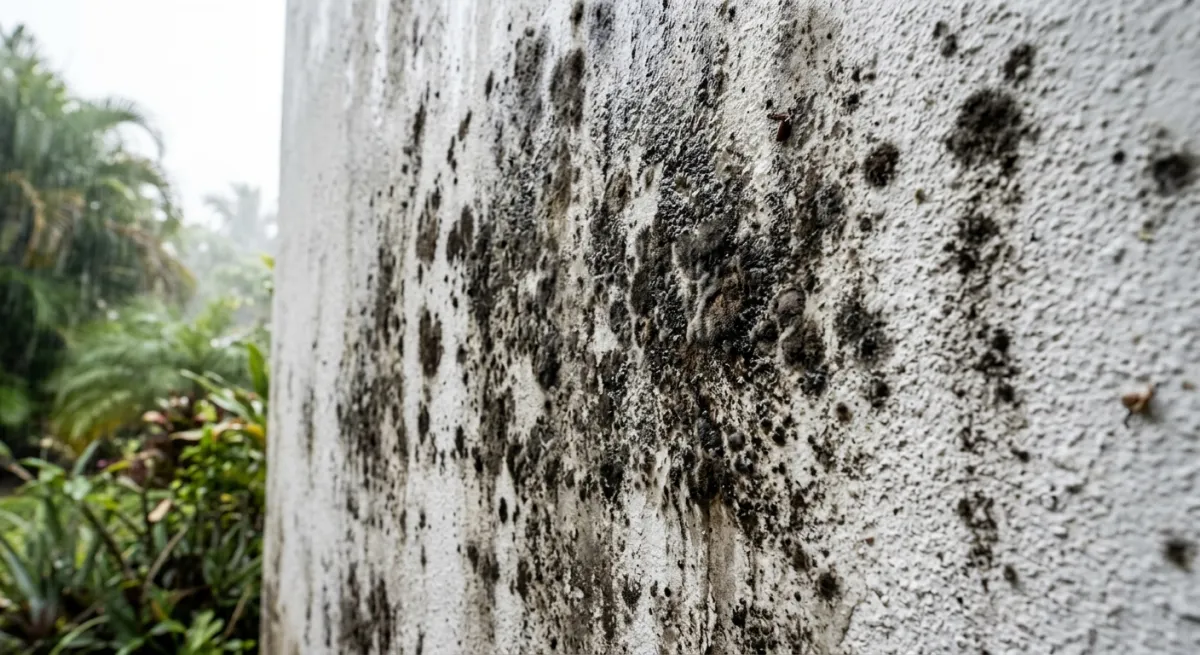
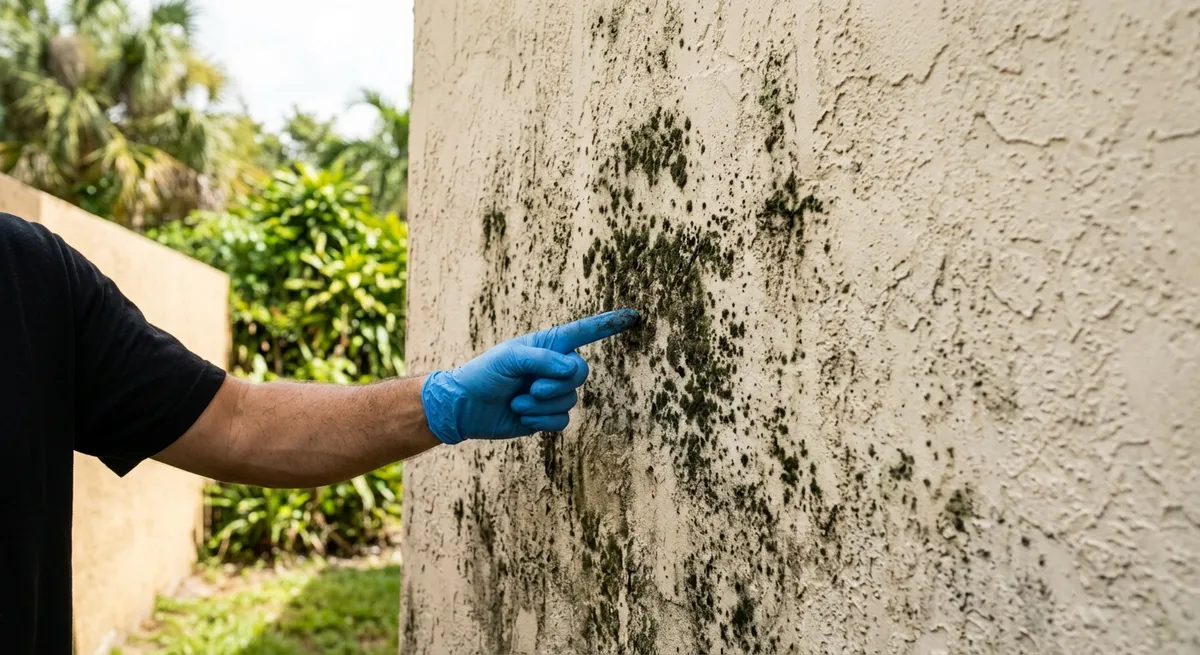
The black streaks on your roof, the green film on your walkways, the dark patches on your stucco walls? Those are living colonies of organisms, actively growing, feeding, and reproducing.
South Florida's climate is basically an incubator for them. Heat, humidity, daily rain, and organic material create conditions where mold, mildew, and algae grow aggressively on virtually every exterior surface.
Most homeowners write it off as cosmetic. But heavy exterior mold growth affects the air around your home — and because no house is truly sealed, what's actively sporulating outside has a direct path in through doors, windows, and HVAC intakes.
What's Growing on Your Home
Gloeocapsa Magma (Black Roof Algae)
Those dark streaks running down roofs throughout Palm Beach County are colonies of cyanobacteria called Gloeocapsa Magma. This organism feeds on the limestone filler in roofing shingles and produces a dark pigmented sheath to protect itself from UV radiation. That's why the streaks are dark.This particular organism isn't a direct health threat on its own. But its presence creates a surface environment where other, more problematic organisms take hold.
Black Mold (Various Species)
The dark patches on stucco walls, under eaves, and in shaded areas may include various mold species including Aspergillus, Cladosporium, and Stachybotrys (commonly called "black mold"). These molds release microscopic spores into the air as part of their reproductive cycle.Green Algae
The green film on concrete, pavers, and wood surfaces is typically composed of various algae species. While less concerning than mold from a health perspective, algae creates a slippery surface that's a safety hazard when wet.Mildew
Mildew—a surface-level fungal growth—appears as white, gray, or yellowish patches on painted surfaces, wood, and fabric. It's common on exterior walls, fence boards, and outdoor furniture in South Florida.How Exterior Mold Can Affect Your Health
Airborne Spore Exposure
Mold reproduces by releasing microscopic spores into the air. A heavily mold-covered exterior surface is continuously releasing these spores into the air surrounding your home. When you open windows, use your lanai, or simply walk around your property, you're potentially breathing elevated levels of mold spores.Who's Most Affected?
Most healthy adults tolerate normal outdoor mold spore levels without symptoms. However, certain groups are more sensitive:If you have mold allergies, elevated outdoor spore levels can trigger sneezing, runny nose, itchy eyes, and skin irritation. South Florida's outdoor mold counts are already high. Heavy growth on your home just adds to that baseline.
Asthma is another concern. Mold spores are a known trigger, and elevated levels around the home can increase both the frequency and severity of episodes, especially during outdoor activities. Children and the elderly are more susceptible because their immune systems are either still developing or declining. And anyone who is immunocompromised faces higher risk from mold exposure generally and should pay close attention to growth around their living spaces.The Indoor Connection
Exterior mold doesn't always stay exterior. That's the part most people miss.Mold spores from your roof, walls, and walkways become airborne and can enter your home through:
- Open windows and doors
- Screen enclosures (screens don't filter mold spores)
- HVAC air intakes that draw outdoor air
- Gaps around windows and door frames
- Attached garage connections
Walkway and Driveway Safety
Beyond air quality, mold and algae on walkways create genuinely dangerous conditions. The black and green growth that forms on concrete and pavers becomes extremely slippery when wet. In a state where afternoon thunderstorms are a daily occurrence half the year, this is a real injury risk.Slip-and-fall accidents on mold-covered walkways can result in serious injuries, particularly for elderly residents. This is both a health concern and a liability issue for homeowners.
The Florida Factor
South Florida's climate means outdoor mold is unavoidable to some degree. You can't eliminate all outdoor mold spores any more than you can eliminate humidity.
But there's a significant difference between normal background levels and the concentrated spore output from heavily mold-covered exterior surfaces. A roof coated in algae, walls streaked with mold, and walkways covered in organic growth collectively create an elevated-exposure zone around your home.
Reducing the growth on your home's surfaces reduces the spore concentration in your immediate environment. It doesn't make your outdoor air sterile—nothing will—but it brings levels back toward the baseline rather than amplifying them.
What Professional Cleaning Does
Kills Organisms at the Root
Professional soft washing goes beyond removing visible growth. The biodegradable cleaning solutions kill mold, algae, and mildew at the cellular level. That's fundamentally different from pressure washing, which knocks off surface growth but leaves living organisms in pores and crevices to regenerate quickly.Provides Lasting Results
Because soft washing kills organisms rather than displacing them, results last significantly longer. A properly soft-washed roof stays clean for 2-3 years. Pressure-washed surfaces? Often show regrowth within weeks because the living root structure was left intact.Reduces Spore Output
Clean exterior surfaces produce dramatically fewer airborne spores than mold-covered ones. And the reduction lasts as long as the surfaces remain clean.Identifies Problem Areas
During professional cleaning, we often spot conditions that promote mold growth: poor drainage near foundations, vegetation growing against walls, damaged gutters causing water overflow, irrigation spray hitting the house. Fixing these underlying issues helps prevent rapid regrowth.What You Can Do Between Professional Cleanings
Improve Air Circulation
Trim vegetation away from exterior walls to improve airflow. Dense landscaping planted directly against your house creates a humid, shaded environment where mold thrives.Fix Moisture Issues
Repair leaking gutters, adjust irrigation heads away from walls, and ensure proper drainage away from your foundation. Eliminating unnecessary moisture sources slows mold growth significantly.Run Your AC
In South Florida, your air conditioning system is also a dehumidifier. Running your AC keeps indoor humidity below the level that supports mold growth, reducing the chance that outdoor spores that enter your home can establish colonies.Change HVAC Filters Regularly
If your HVAC system has an outdoor air intake, quality filters help capture mold spores before they circulate through your home. Change filters monthly during the humid season (May-October).Clean Surfaces, Cleaner Air
Removing mold, algae, and mildew from your home's exterior surfaces does more than improve curb appeal. It reduces the biological load in your immediate living environment. That's why we treat exterior cleaning as genuine property maintenance, not just cosmetic work. Request your free quote to get started.