July: The Halftime Check
If South Florida's storm season were a football game, July would be halftime. Hurricane season is in full swing. Rainy season is in full swing. Your home has been taking hits from daily thunderstorms, brutal humidity, and temperatures that turn every surface into a petri dish for biological growth.
July is the perfect time to walk your property, assess the situation, and make decisions about what needs attention now versus what can wait until fall. Some issues need mid-season service. Others are developing but can be monitored. And some are red flags that shouldn't wait another day.
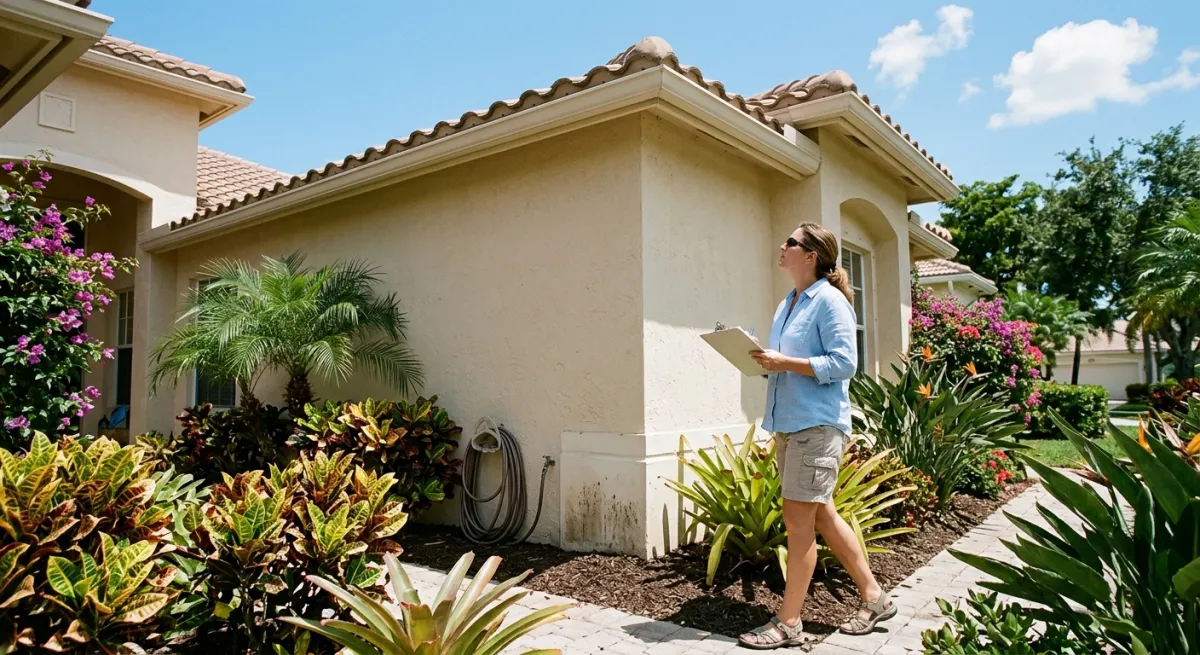
Here's the complete walk-around inspection checklist for Palm Beach Gardens, Jupiter, West Palm Beach, and the rest of Palm Beach County. Grab your phone for photos, put on some shoes (fire ants love this weather too), and let's walk the property.
Gutters and Downspouts
Summer storms dump massive amounts of rain in short bursts. Clogged gutters don't slowly overflow — they waterfall over the edge and down your walls. Two months of debris (palm fronds, leaves, seed pods, shingle granules) can turn a functioning gutter into a dam.
From the ground, look for debris sitting above the gutter line, plants growing in accumulated soil, water stains or streaking on walls below gutter seams (overflow evidence), gutters pulling away from the fascia, and any standing water still present after rain stops. Check that all downspout connections are intact and directing water away from the foundation.
Action items:- If gutters are visibly clogged, clean them now or schedule cleaning -- waiting means more wall damage with every storm
- If gutters are pulling away, this is a structural repair that should happen before any more heavy rain
- If downspouts discharge too close to the foundation, add splash blocks or extensions to direct water at least 4-6 feet away from the house
The Roof
Why check now: Your roof has been through two months of daily heat cycling (expansion and contraction), wind, rain, and potential debris impacts. This is also peak growing season for Gloeocapsa Magma and other algae that attack your roofing material. What to look for (from the ground -- do not climb onto your roof):- New dark streaking that wasn't there in spring -- this is algae spreading
- Missing, displaced, or cracked tiles/shingles from wind or debris impacts
- Flashing damage around vent pipes, chimneys, or skylight frames
- Debris accumulation in valleys, behind dormers, or against walls where the roof meets a second story
- Sagging areas that could indicate water damage to the decking underneath
- Gutter granules -- if you see excessive shingle granules in the gutter (for asphalt shingle roofs), the roof is degrading
- New algae spreading across the roof signals it's time to schedule a roof cleaning if it hasn't been done recently
- Any missing or damaged tiles/shingles need immediate repair before the next storm
- Significant debris accumulation on the roof should be removed by a professional -- walking on a wet roof is extremely dangerous
Stucco and Exterior Walls
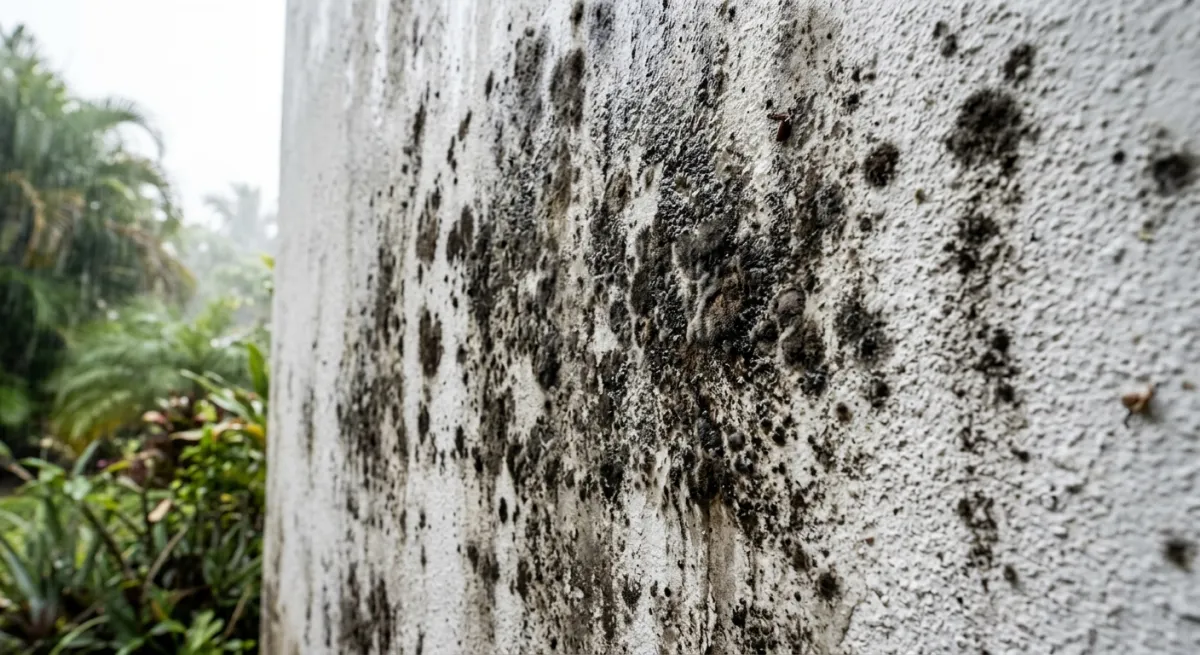
Why check now: Mold and mildew growth accelerates dramatically during summer. Walls that were clean in April can be noticeably discolored by July. You're also looking for structural issues that summer storms may have caused or worsened. What to look for:- Mold spreading -- compare what you see now to what you remember from spring. Is it noticeably worse? Is it spreading from the north side to other walls?
- New cracks -- especially horizontal or diagonal cracks that weren't there before. These could indicate settlement, structural movement, or storm damage
- Water stains that suggest moisture is getting behind the stucco (dark patches that appear wet even when it hasn't rained recently)
- Paint bubbling or peeling -- this indicates moisture behind the surface
- Stucco damage at the base of walls from splash-back during heavy rain
- Irrigation stains -- white mineral deposits or green algae streaks in the sprinkler spray zone
- Spreading mold on walls is a mid-season cleaning candidate -- don't let it get worse for three more months
- New cracks should be documented and monitored -- photograph them with a ruler for scale and check again in a few weeks
- Water stains or bubbling paint may indicate a leak or moisture intrusion that needs professional evaluation
- Irrigation stains mean your sprinklers need adjustment (address the source before cleaning the stain)
Driveway and Walkways
Why check now: The combination of daily rain and summer heat creates ideal algae growing conditions on horizontal concrete and paver surfaces. These surfaces also receive the most foot and vehicle traffic, and algae makes them dangerously slippery. What to look for:- Green or black algae covering the surface, especially in shaded areas
- Slippery feel when you step on wet areas -- test this carefully
- New cracks or settling in concrete from tree root growth or ground movement
- Paver displacement -- have any pavers shifted, sunk, or heaved?
- Weed growth between pavers or in concrete joints
- Oil stains or other spots that have developed since the last cleaning
- If the driveway or walkway is slippery when wet, this is a safety issue that should be addressed promptly
- Significant cracking or settlement may indicate structural issues that need repair before cosmetic cleaning
- General algae and grime buildup can be addressed with scheduled cleaning -- this is a great candidate for mid-summer service
Pool Deck
Why check now: This is the most critical safety surface on your property during summer. The pool deck is in use constantly, guests walk on it barefoot, and algae growth on pool decks creates genuine slip-and-fall hazards. What to look for:- Algae film on the deck surface -- run your hand across it. If it's slimy, it's dangerous
- Discoloration around the pool edge from chemical splash and hard water deposits
- Cracks in the deck or around the coping (the cap that edges the pool)
- Drainage issues -- does water pool on the deck after rain instead of flowing away?
- Coping condition -- is the coping secure, or are pieces loose or cracked?
- Non-slip texture condition -- if your deck has a textured coating, is it still intact or wearing away?
- A slimy pool deck is a clean now situation, not a "schedule for fall" situation. This is about safety
- Loose or cracked coping can be a trip hazard and needs repair
- Drainage problems should be addressed to prevent standing water where people walk
Screen Enclosure
Why check now: Screen enclosures take a beating during summer storms. Wind pressure, debris impacts, and constant humidity all stress the structure. A mid-summer check can catch problems before a stronger storm makes them worse. What to look for:- Torn or punctured screens -- check every panel, especially lower panels that get debris strikes
- Screens pulling out of the spline channel -- wind vibration and heat expansion loosen screens over time
- Bent or misaligned frame members -- compare opposite sides of the enclosure. If one side looks off, it may have shifted
- Loose or missing fasteners where the enclosure connects to the house or slab
- Rust or corrosion on aluminum frame members, especially at joints and connections
- Door operation -- do screen doors close and latch properly? Misalignment can indicate frame shifting
- Torn screens allow insects and debris inside and should be repaired before fall storm season intensifies
- Structural issues (bent frames, loose connections) need professional evaluation -- a weakened enclosure can fail catastrophically in a strong storm
- Dirty screens reduce airflow and trap humidity -- cleaning improves both comfort and mold prevention inside the enclosure
Landscaping Against the House
Why check now: Summer is peak growing season for everything in South Florida -- including the vegetation around your home. Plants that were trimmed in spring may have grown significantly in two months. What to look for:- Shrubs and hedges touching exterior walls -- these trap moisture and promote mold
- Tree branches overhanging the roof or rubbing against walls
- Vines or climbing plants growing on walls, fences, or the screen enclosure
- Mulch piled against the foundation -- mulch holds moisture against the stucco
- Irrigation overspray hitting walls, windows, or the foundation
- Root growth that's lifting pavers, cracking walkways, or pushing against the foundation
- Trim vegetation back 12-18 inches from all walls -- this is the single most impactful mold prevention step
- Remove any branches that overhang the roof or touch the house
- Pull mulch back at least 6 inches from the foundation to allow the base of walls to breathe
- Fix irrigation overspray immediately -- this causes both mold and hard water staining
Red Flags: Don't Wait on These
Some findings from your mid-summer walk-around need immediate action:
- Roof damage (missing tiles/shingles, damaged flashing) -- one storm with heavy rain can cause interior water damage
- Structural cracks in stucco that are new or widening -- could indicate foundation issues
- Screen enclosure structural damage -- a weakened enclosure becomes a projectile hazard in a strong storm
- Standing water against foundation -- can lead to foundation damage, interior moisture, and termite attraction
- Slippery pool deck -- someone could get hurt today, not next month
What Can Wait Until Fall?
Not everything needs immediate service. Some items from your inspection can be noted and addressed after rainy season winds down in October:
- Cosmetic stucco staining that isn't spreading rapidly
- General exterior wall cleaning (unless mold is spreading aggressively)
- Sealing or coating projects that need sustained dry weather
- Painting or paint prep that requires dry conditions
- Aesthetic landscape adjustments that don't affect moisture management
Planning Ahead: Post-Season Cleaning
While you're doing your mid-summer checkup, it's also smart to start thinking about your post-hurricane-season cleaning in October or November. This is when most Palm Beach County homeowners do their major annual cleaning, and scheduling early means better availability.
A typical post-season cleaning addresses:
- Full house wash to remove the summer's accumulated mold and mildew
- Roof cleaning to clear algae growth from the entire season
- Driveway and walkway pressure washing
- Screen enclosure cleaning
- Pool deck deep clean
- Any sealing or protective treatments that need dry weather
Your Mid-Summer Action Plan
After your walk-around, sort your findings into three categories:
1. Fix now -- safety issues, structural problems, damage that will worsen 2. Mid-summer service -- surfaces that need cleaning before fall (pool deck, spreading mold, slippery walkways) 3. October plan -- comprehensive cleaning and maintenance when weather cooperates
Get your free quote for mid-summer exterior cleaning and maintenance. Whether you need a targeted service for your pool deck and walkways or a more comprehensive mid-season refresh, we'll build a plan around what your home actually needs right now. Don't let small problems become big ones -- the second half of storm season is still ahead.