After the Storm: Damage or Dirt?
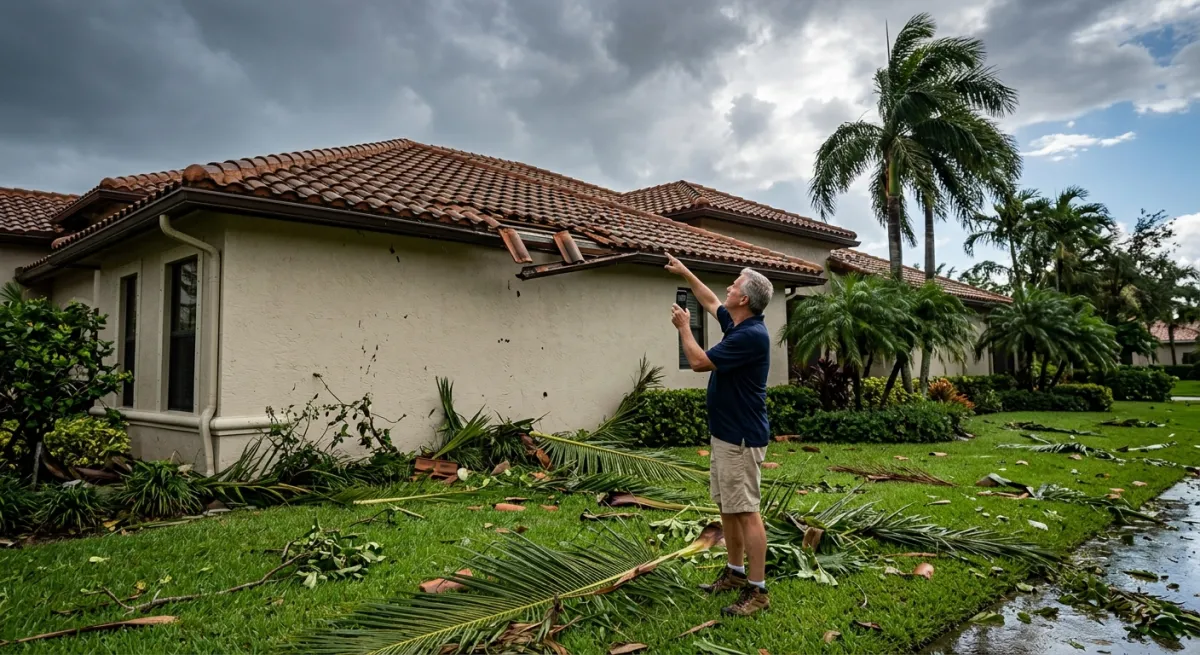
If you've lived in Palm Beach County through a few summers, you know the drill. A strong thunderstorm or tropical system blows through, and the next morning you're walking your property looking at things you've never noticed before. Dark streaks on the roof. Stains on the walls. Something that looks off about the screen enclosure.
The question every homeowner asks: Is this new damage from the storm, or was it already there?
It's a more important question than you might think. Storm damage may be covered by your homeowner's insurance. Normal wear and deterioration is not. The ability to tell the difference can mean thousands of dollars in repair costs -- either covered by your policy or coming out of your pocket.
And here's the thing nobody talks about: how clean your home is before the storm dramatically affects your ability to identify new damage afterward.
How to Identify Actual Storm Damage
Storm damage has distinct characteristics that differentiate it from gradual wear. Here's what to look for on each major exterior surface:
Roof Damage Indicators
Signs of storm damage:- Missing or displaced shingles/tiles -- storms rip shingles loose, especially at edges and ridges
- Directional damage patterns -- wind damage typically shows on one side of the roof (the side facing the wind direction)
- Impact marks or dents from hail or wind-driven debris
- Cracked or broken tiles with sharp, fresh break lines (not weathered or rounded edges)
- Lifted or peeled flashing around vents, chimneys, and roof transitions
- Debris on the roof -- branches, fronds, or other objects that impacted the surface
- Even, gradual discoloration across the entire roof surface (this is algae growth over time)
- Granule loss that's uniform rather than concentrated in impact points
- Worn edges on shingles that are smooth and weathered, not torn
- Slow deterioration of sealant around flashings and penetrations
- Moss or lichen growth -- this develops over months, not overnight
Siding and Stucco Damage
Signs of storm damage:- New cracks that weren't there before -- especially horizontal or diagonal cracks that suggest impact or structural shifting
- Impact marks from debris -- these show a clear point of contact with radiating damage
- Water intrusion stains that appear suddenly after a storm with heavy wind-driven rain
- Paint peeling in large sections stripped by wind (not gradual flaking)
- Holes or punctures from flying objects
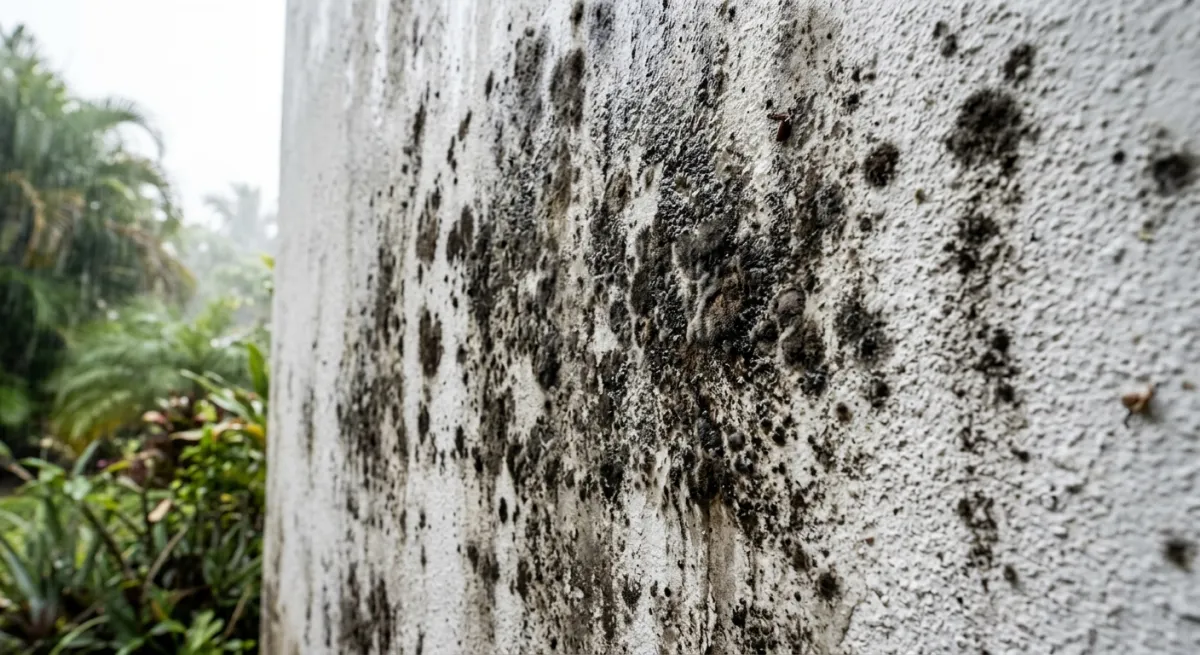
- Mold and mildew staining that's developed gradually over weeks or months
- Hairline cracks in stucco that follow the building's natural settling patterns (usually vertical at window/door corners)
- Gradual paint fading or chalking from UV exposure
- Efflorescence (white mineral deposits) working outward from within the wall
- Dark streaks below gutters or windowsills from normal water runoff
Screen Enclosure Damage
Signs of storm damage:- Torn screens -- the fabric itself is ripped, not just pulled from the spline channel
- Bent or twisted frame members -- aluminum framing that's been pushed out of alignment
- Detached sections where bolts pulled through or connections failed
- Punctures from flying debris hitting the screen
- Collapsed or sagging sections that were previously straight
- Screens pulling out of spline channels (the rubber gasket that holds screens in the frame) -- this happens gradually from age, heat expansion, and wind vibration
- Oxidation and pitting of aluminum frame members
- Sagging screens from years of UV degradation weakening the mesh
- Discoloration of screen fabric from pollen, dirt, and organic buildup
Fence and Wall Damage
Signs of storm damage:- Leaning or fallen sections that were upright before the storm
- Broken posts snapped by wind force or falling branches
- Impact damage from trees, branches, or debris striking the fence
- Gate damage from wind catching the gate and bending hardware
- Gradual leaning from years of settling, root intrusion, or termite damage
- Mold and algae growth covering fence surfaces
- Wood rot at ground level from constant moisture exposure
- Fading and weathering of painted or stained surfaces
The "Clean Baseline" Concept
Here's where exterior cleaning connects directly to storm preparedness, and it's something most homeowners never think about.
A clean home is dramatically easier to assess for new damage than a dirty one.Think about it: if your walls are already covered in dark mold stains, how do you know whether a new dark mark is storm damage or just more mold? If your roof already has heavy algae streaking, how do you identify fresh damage vs. existing discoloration? If your screen enclosure is caked with grime, can you tell if a screen was torn by debris or was already deteriorating?
When your exterior surfaces are clean, any new mark, stain, crack, or damage stands out immediately. Fresh debris impact on a clean white wall is obvious. New roof damage on clean tiles is unmistakable. A torn screen in an otherwise clean enclosure is clearly identifiable.
Documentation Matters for Insurance
If you ever need to file an insurance claim for storm damage, you'll need to demonstrate that the damage was caused by the specific weather event. Insurance adjusters are trained to differentiate storm damage from pre-existing conditions, and they will deny claims for damage they determine was gradual wear.
Having a recently cleaned home gives you a clear "before" baseline. If your home was professionally cleaned two weeks before a storm and now shows new damage, the timeline strongly supports a storm damage claim.
Even better: take photos of your clean home after each professional cleaning. Date-stamped photos showing clean, damage-free surfaces provide excellent documentation if you ever need to file a claim. Walk around the house, photograph each wall, the roof (if possible), the screen enclosure, and the fence. Store these photos somewhere safe -- cloud storage is ideal.
Red Flags That Need Immediate Attention
Some post-storm observations require immediate action, whether the damage is storm-related or was pre-existing:
Emergency Items (Address Immediately)
- Roof penetrations or missing tiles that expose the underlayment or deck -- water will enter your home with the next rain
- Structural damage to screen enclosure that could collapse further
- Downed trees or branches leaning on structures
- Exposed electrical from damaged exterior fixtures or torn conduit
- Standing water against foundation from blocked drainage
Urgent Items (Address Within Days)
- Damaged flashing or sealant that could allow water intrusion
- Broken window seals or cracked glass
- Loose gutters or downspouts that can cause wall damage if not reattached
- Damaged fence sections that compromise security or pool barrier compliance
Monitor Items (Address Within Weeks)
- Cosmetic stucco cracks that don't penetrate to the wall structure
- Minor screen damage in non-essential areas
- Surface staining from debris or leaf tannins
- Displaced landscaping affecting drainage patterns
When to File an Insurance Claim vs. When to Just Clean
This is the question that costs homeowners the most money when they get it wrong -- in both directions.
File a Claim When:
- Damage is clearly from the weather event and exceeds your deductible (which in Florida for wind/hurricane is typically 2-5% of your home's insured value)
- Structural damage to roof, walls, or screen enclosure
- Water intrusion has occurred inside your home
- Multiple systems are damaged (roof + screens + fence, for example)
Don't File a Claim When:
- The "damage" is actually just dirt, debris, or staining that can be cleaned off
- Wear and tear was accelerated by the storm but was already progressing
- Repair costs are below your deductible -- filing a claim for less than your deductible just creates a claims history with no payout
- The issue is cosmetic and doesn't affect structural integrity or function
The Gray Area
Many situations fall in between. A storm deposits leaf tannin stains on your freshly painted walls -- is that damage? Tree sap runs down your roof from broken branches overhead -- does that qualify? Heavy rain drives dirt into your stucco through existing hairline cracks -- storm damage or maintenance?
In these gray areas, documenting everything and consulting with a professional before filing a claim is the smartest move. We see a lot of post-storm situations where what looks like damage is actually just surface-level debris and staining that comes off with a proper cleaning.
Post-Storm Cleaning: What to Prioritize
After a storm passes through Palm Beach County, here's the order of operations we recommend:
1. Safety first -- stay away from downed power lines, standing water, and unstable structures 2. Document everything with photos before touching anything 3. Remove debris from your property (carefully) 4. Assess for actual structural damage vs. surface-level mess 5. Contact your insurance if you identify legitimate damage 6. Schedule professional cleaning for the surface-level debris, staining, and dirt the storm deposited
A post-storm cleaning typically addresses:
- Leaf and debris staining on walls and concrete
- Dirt and mud splashed onto lower walls by heavy rain
- Organic debris on roof, gutters, and screen enclosures
- Sand and grit on pool decks and patios
- Tree sap and tannin stains from broken branches
Build Your Pre-Storm Baseline Now
Hurricane season runs June through November, and we're right in the middle of summer storm season. If your home hasn't been cleaned recently, now is the time to establish that clean baseline.
Having a clean, documented exterior before a storm hits gives you:
- Clear evidence of your home's pre-storm condition
- Easy identification of new damage after a weather event
- Stronger insurance claims supported by before-and-after documentation
- Peace of mind knowing exactly what's new and what was already there